

Table of Contents
- Why Your Scalp Is Dry and Itchy (and Why It Keeps Coming Back)
- Common Causes of Dry Flaky Scalp
- The Best Dry Scalp Treatment Options, Ranked by Scenario
- A Weekly Scalp Care Routine for Hydration
- Diet, Stress, and Other Internal Triggers Most Guides Skip
- When to See a Professional for Scalp Therapy
- Frequently Asked Questions
Last Updated: September 19, 2026
Why Your Scalp Is Dry and Itchy (and Why It Keeps Coming Back)
A dry, itchy scalp rarely improves with guesswork. A dry, itchy scalp rarely improves with guesswork. The reason is simple: dry scalp and dandruff look alike but need opposite approaches. Treat the wrong one and the itch returns within days.
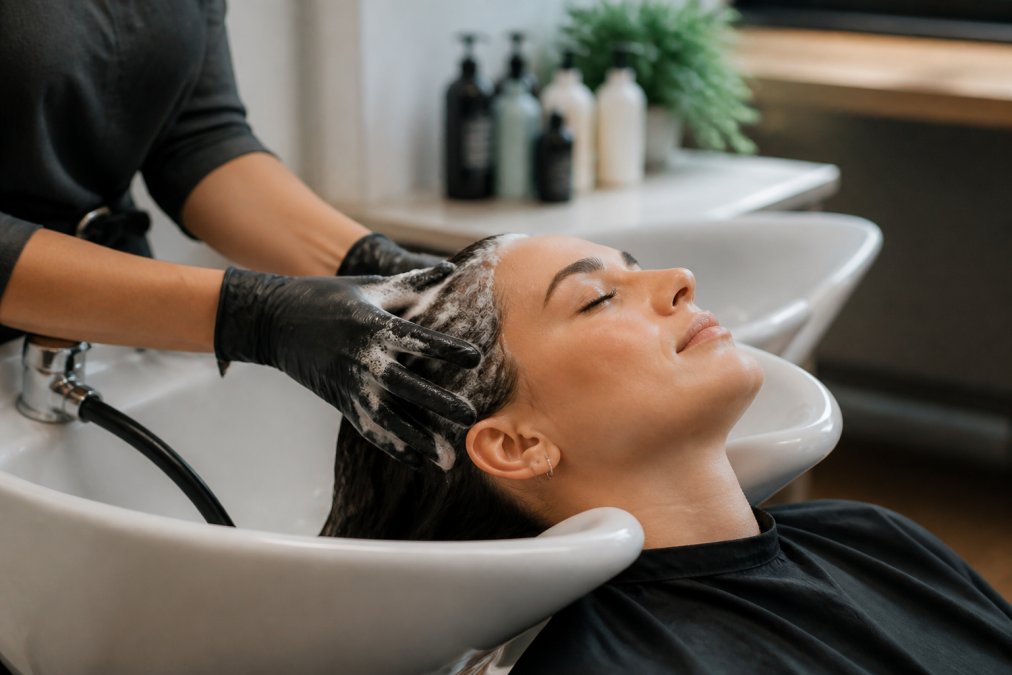
Scalp therapy is the practice of restoring moisture, calming irritation, and supporting the scalp barrier through targeted treatments and consistent care. It works on the skin itself, not just the hair sitting on top of it.
Dry Scalp vs. Dandruff: How to Tell Them Apart
Dry scalp flakes are small, white, and dry. Dandruff flakes are larger, yellowish, and often greasy. Dry scalp usually itches without redness. Dandruff often comes with inflammation and a waxy buildup near the hairline.
Common Causes of Dry Flaky Scalp
The causes of dry flaky scalp usually come down to a handful of repeat offenders. Hot water, harsh sulfates, and overwashing strip the natural oils that keep the scalp barrier intact. Cold, dry air pulls moisture out of the skin. So does indoor heating.
A few more triggers worth knowing:
- Product build-up from heavy stylers and dry shampoo
- Skipping conditioner near the roots, which leaves skin unprotected
- Underlying conditions like seborrheic dermatitis, which needs medical care
- Aging, which slows oil production over time
- Certain medications and medical treatments
The Best Dry Scalp Treatment Options, Ranked by Scenario
The best dry scalp treatment depends on what's causing your flaking. There is no single product that fixes every case, and anyone who tells you otherwise is selling something. What separates an effective routine from a wasted purchase is matching the active ingredient to the mechanism behind your symptoms.
Here's how the main options stack up:
| Scenario | Best Approach | Why It Works |
|---|---|---|
| Mild dryness, no redness | Moisturizing shampoo plus a weekly pre-shampoo oil treatment | Restores lipids without stripping |
| Flaking with greasy buildup | Salicylic acid or selenium sulfide shampoo | Loosens scale and controls yeast |
| Itching with inflammation | Anti-inflammatory scalp serum, dermatologist visit | Calms irritation at the source |
| Sensitive, reactive scalp | Fragrance-free products, gentle exfoliation | Reduces trigger exposure |
| Thinning hair plus dryness | Professional scalp therapy with peptide support | Treats scalp and follicle health together |
The Active Ingredients That Actually Do the Work
Most scalp products fail because they moisturize the surface without addressing the mechanism underneath. Here is what the proven actives do, and who they suit.
- Salicylic acid. A beta-hydroxy acid that dissolves the intercellular glue holding dead skin cells together, so scale lifts away instead of piling up. Common in over-the-counter anti-dandruff shampoos and scalp scrubs. Best for flaking with visible buildup. It can be drying, so pair it with a moisturizing conditioner on the ends.
- Selenium sulfide. Slows the turnover of scalp skin cells and reduces the malassezia yeast that drives seborrheic dermatitis. Found in medicated dandruff shampoos. Best for greasy, yellowish flakes. Follow the label's contact time, rinsing too fast defeats it.
- Zinc pyrithione. An antimicrobial that targets yeast and bacteria on the scalp surface. Gentler than selenium sulfide and a common first-line choice for mild to moderate flaking.
- Ketoconazole. A prescription-strength antifungal for stubborn seborrheic dermatitis. A dermatologist decides whether you need it.
- Coal tar. Slows cell turnover and reduces itching and scaling. Effective but drying and odorous, so it's usually a later-line option.
- Glycerin and hyaluronic acid. Humectants that pull water from the air and deeper skin layers into the top layer. Best for true dryness without heavy flaking. They hydrate but don't exfoliate, so they won't fix yeast-driven dandruff.
- Ceramides and niacinamide. Barrier-repair ingredients. Ceramides replace the lipids between skin cells; niacinamide supports the skin's own barrier and calms redness. Best for a reactive, tight, or stinging scalp.
- Colloidal oatmeal and bisabolol. Soothing agents that reduce itch signaling and irritation. Best for sensitive scalps that react to stronger actives.
What to Look For on the Label
Look for humectants like glycerin and hyaluronic acid, which pull water into the skin. Argan oil and similar plant oils help seal that moisture in. Salicylic acid handles exfoliation when there's buildup (pubmed.ncbi.nlm.nih.gov). Selenium sulfide targets yeast-related flaking.
Medicated vs. Natural: How to Choose
American Academy of Dermatology guidance on treating dandruff and seborrheic dermatitis
A Weekly Scalp Care Routine for Hydration
A scalp care routine for hydration works best when it's simple enough to repeat. Most guides list steps without explaining the order of operations, which is where people go wrong. The rule is simple: thinnest, water-based products go on first and closest to the scalp; oils and occlusives go on last because they block anything applied after them from absorbing.
The Order of Operations: A Routine Builder
If you use more than one product, the sequence matters as much as the ingredients. Build your routine in this order:
- Pre-wash oil or scalp treatment, applied to dry scalp, sits 20 minutes, washed out.
- Cleanser, sulfate-free shampoo, massaged into the scalp.
- Exfoliant, only on scrub days, after cleansing, before conditioning.
- Water-based serum or hydrating mist, applied to a damp scalp, absorbs first.
- Oil or occlusive, applied last to seal everything in.
- Leave-in conditioner, mid-lengths and ends only, never the scalp.
Layering Products Without Weighing Hair Down
The trick is order and quantity. Apply the lightest product first, closest to the scalp. Oils and serums go before shampoo. Leave-in treatments go after, and only on the mid-lengths and ends.
How to Adjust the Routine for Your Hair Type
Hair texture changes how much product your scalp can tolerate before it looks greasy. The same routine that rescues a coily scalp will flatten a fine one.
- Fine or straight hair. Stick to water-based hydrators, lightweight serums, and a few drops of a non-greasy oil like squalane. Skip heavy butters and thick oils, they travel down the strand and kill volume. Wash more often if needed; fine hair shows buildup fast.
- Medium or wavy hair. The standard routine above works well. You can handle a weekly oil treatment and a richer mask without weighing hair down.
- Coily, curly, or textured hair. The scalp is often drier because natural oils struggle to travel down the curl pattern. You can use richer oils like castor or jojoba, leave pre-shampoo treatments on longer, and wash less often, every 7 to 10 days is common. Focus cleansing on the scalp and conditioning on the lengths.
- Thinning or fine-and-thinning hair. Avoid heavy oils entirely. Choose lightweight, water-based scalp serums and peptide-support treatments, and keep the scalp clean so follicles aren't smothered.
Diet, Stress, and Other Internal Triggers Most Guides Skip
What you eat and how you sleep show up on your scalp. Diets low in healthy fats and zinc often correlate with drier, more reactive skin. So does chronic stress, which raises inflammation throughout the body.
A few internal factors worth watching:
- Low water intake, which reduces skin hydration from the inside
- High sugar and processed food intake, linked to inflammation
- Poor sleep, which slows skin repair
- Certain vitamin deficiencies, which a doctor can test for
When to See a Professional for Scalp Therapy
See a professional when home care stops working. Red flags include persistent redness, open sores, hair loss, or itching that disrupts your sleep. These point to conditions like seborrheic dermatitis that need a dermatologist's care.
Frequently Asked Questions
What is the best treatment for an itchy, dry scalp?
There is no single best option, because the right pick depends on whether your scalp is simply dry or inflamed. For mild dryness, a fragrance-free moisturizing shampoo paired with a weekly pre-shampoo oil treatment usually calms itching within two to three weeks. If flaking is persistent and greasy-looking, look for selenium sulfide or salicylic acid, which target the yeast linked to seborrheic dermatitis. A scalp therapy session at a salon can help you identify which category you fall into before you spend money on products.
What vitamin deficiency makes your scalp itch?
Low levels of vitamin D, B vitamins (especially B7, biotin), zinc, and iron are the deficiencies most often linked to an itchy, flaky scalp. That said, itching is rarely caused by a deficiency alone. Crash diets, heavy alcohol use, and certain medications can drain these nutrients faster than diet replaces them. If you eat a varied diet and still itch, the cause is more likely external, such as product build-up or a disrupted scalp barrier, than a missing vitamin.
How do you rehydrate a dry scalp without making hair greasy?
Apply oils and rich treatments to the scalp only, 30 to 60 minutes before washing, then shampoo twice at the roots and let conditioner touch just the mid-lengths and ends. Choose lightweight humectants like glycerin or hyaluronic acid for daily use, and reserve heavier oils like argan oil for a weekly pre-shampoo treatment. Rinsing with lukewarm, not hot, water also protects the scalp barrier and reduces transepidermal water loss.
When should you see a professional for scalp therapy?
Book a professional evaluation if itching has lasted more than three to four weeks, if you notice redness, crusting, open sores, or patches of hair loss, or if over-the-counter medicated shampoo has not helped after a month of consistent use. A stylist trained in scalp therapy can assess product build-up, pH balance, and scalp sensitivity, and refer you to a dermatologist if the pattern points to seborrheic dermatitis or another condition that needs a prescription ointment.
0 comments